The Grief Nobody Talks About
Jan 06, 2026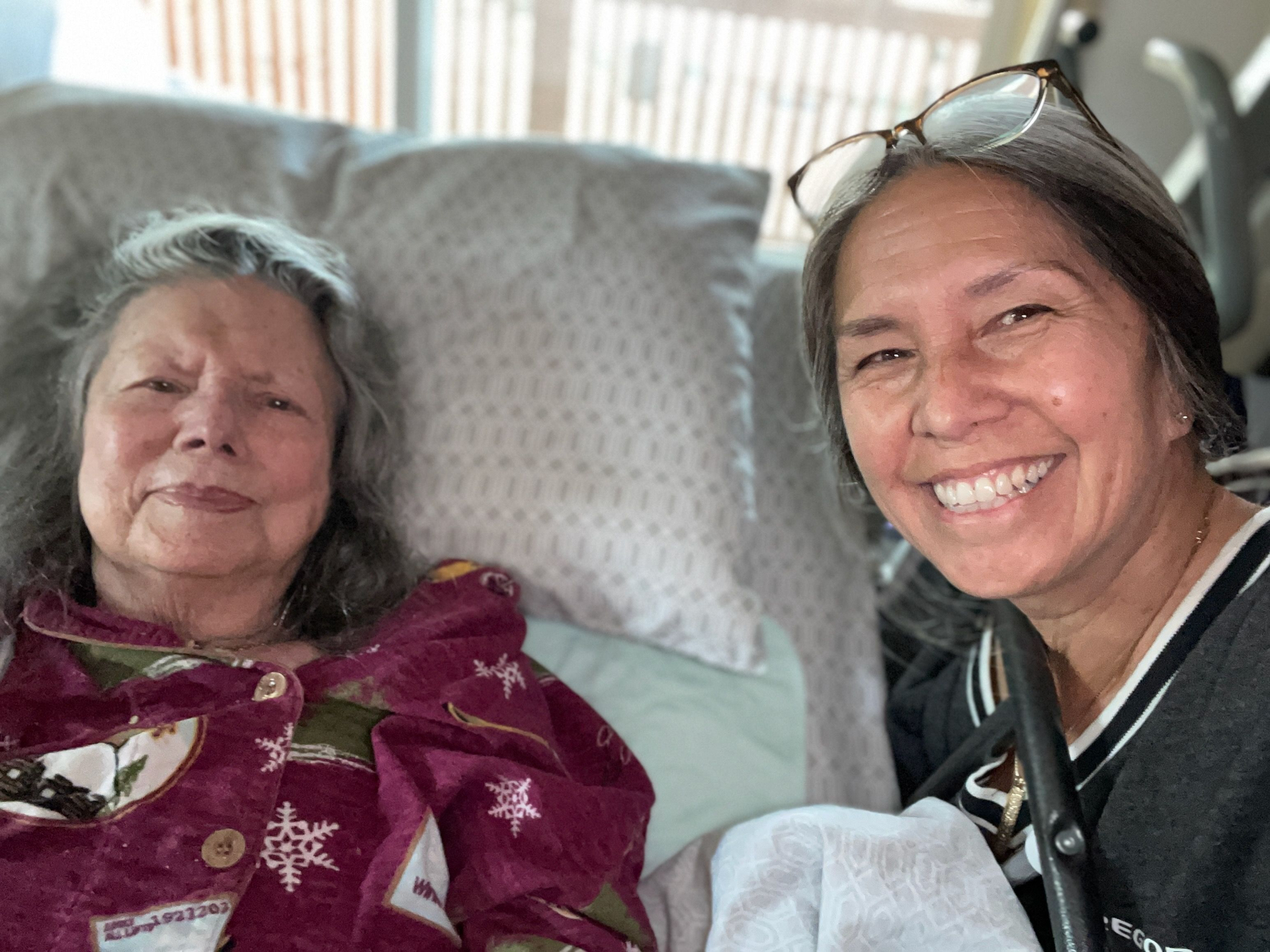
For the ones grieving someone who's still here
You only know what kind of story yours is when you know the ending.
I know mine is a love story.
Two weeks ago, I wrote about responding differently to my dad at Thanksgiving—choosing presence over performance, saying "quality not quantity" instead of abandoning myself to keep the peace.
Days later, I had another conversation with him. One I didn't see coming. One that showed me exactly what anticipatory grief really is—and why understanding it changes everything.
I'll write about that conversation soon.
But first, I want to give you the framework for what anticipatory grief actually is—because understanding it is the first step toward carrying it differently.
I Was Driving My Mom Home From the ER
It was a short visit this time. Three hours roundtrip. She looked out the window and said:
"Well, I guess I won't be seeing Nana and Grandpa today."
They'd been gone for years.
But in her mind, they were waiting.
In that moment, I had a choice:
Correct her and bring her back to pain.
Or let both of us breathe for a moment.
So I said:
"Not today. But when you do, I'll be happy for you and sad for me."
She looked at me with total clarity and said:
"Thank you."
That's when everything clicked.
I wanted her to find peace, and I dreaded losing her.
I felt relief when days ended, and guilt for feeling relief.
I loved her deeply, and I was exhausted.
I was surviving. Performing strength. Smiling through heartbreak.
That's anticipatory grief.
And it's impossible to hold alone.
The Grief Nobody Names
Anticipatory grief is what happens when you're losing someone slowly—even if they're still physically here.
Not after they die—while they're still here.
It's grieving:
- Someone whose dementia is stealing them
- A parent who no longer remembers you
- A partner who's slipping away
- A relationship that feels like it's already part memory
It's the quiet ache of showing up every day while slowly letting go.
And nobody talks about it.
What It Actually Looked Like
I used to watch my mom sleep through the Alexa video screen.
Just watching. The rise and fall of her chest. Making sure.
Every cough made my heart pause. Every time she choked, I held my breath until she caught hers.
As her dementia progressed, she spoke less. Became quieter. More observant. So I hung on every word—afraid I'd miss something important.
Because I was afraid.
Afraid there wasn't enough time. Afraid there wasn't enough money. Afraid I was failing her, for her own life.
I Googled "help for caring for loved one with dementia" at 2am from hotel rooms. I read Boundary Boss. I bought books on memory care. I tried anything that might make the impossible feel navigable.
I wanted answers for something that had no answers.
And the whole time, I walked around feeling like I wasn't enough.
That's anticipatory grief.
And nobody told me it had a name.
Why Nobody Talks About It
When someone dies, people understand what to do.
They bring food. They send cards. They say "I'm so sorry." They give you space to grieve.
But when someone is dying slowly—over months, years—people become unsure.
So they say things like:
- "At least you still have time." (They give you space to grieve before the world gives you permission to grieve.)
- "Stay positive." (You're being erased.)
- "You're doing great." (She's lucky to have you.)
They mean well.
But what you hear is:
Be grateful. Don't complain. You don't get to fall apart yet.
So you don't.
You keep showing up. You keep watching the video screen. You keep leaving for work even though your heart breaks each time.
And inside, you're drowning.
Not from the big moments—but from the quiet ones you can't do anything about.
The Things You Stop Sharing
There came a point when I stopped telling my mom where I was going.
Not because I didn't want to.
Because I was afraid she'd ask to come.
And I'd have to say no.
My next do everything together—errands, coffee, everyday life.
Then one day, I couldn't tell her I was going to the store. Or meeting a friend. Or doing anything that would have been natural to join.
Because each "no" was a reminder of what we'd lost.
So I stopped sharing.
We stayed in safe conversations. Stayed close in the ways we could, but couldn't participate in anymore.
I wasn't just watching her world shrink.
I was hiding pieces of mine so she wouldn't have to feel the loss.
That's anticipatory grief too.
One Perfect Afternoon by the River
One day, we managed to get her out of the house.
It took effort—the car, the oxygen tank, the shoes, the coordination.
But we did it.
We drove to the river and sat for hours.
We laughed. We cried. We just existed.
![Photo of Heidi and her mom by the river, both laughing]
When I asked if she wanted to go anywhere else, she said:
"Nowhere but home. Let's stay a little while."
Not restless. Not wanting more. Just present.
A little while longer was all she wanted.
And sitting beside her—grateful and heartbroken—I realized:
Her world was becoming so small. And even then, she found gratitude.
That's anticipatory grief.
Loving someone through the shrinking of their world and being grateful for what you're still in it.
The Guilt Nobody Talks About
I didn't feel angry at my mom.
I felt angry at myself.
For not being there enough. For not having the means to get her more help. For leaving for work when she needed me. For having a life, mobility, independence—while hers was slipping away.
Nobody told me that feeling was part of anticipatory grief.
Nobody told me that caregiver guilt becomes a constant companion.
Not enough time. Not enough money. Not enough of you to go around.
Just...not enough.
What I Know Now
I've lived anticipatory grief multiple times now.
Grandparents. In-laws. My mom. My dog. And now...
And here's what I wish someone had told me:
You're not failing.
You're doing something impossible.
You're loving someone through the slow fade. You're carrying weight no one can see. You're grieving before the world gives you permission to grieve.
That's not failure.
That's anticipatory grief.
And it's real. And it's brutal. And it doesn't have to pretend it isn't heavy.
Happy for You, Sad for Me
That phrase I said to my mom in the car?
"I'll be happy for you and sad for me."
That became everything.
It became permission to hold contradictions.
To want her suffering to end AND dread the moment she's gone.
To feel relief AND feel love.
To be exhausted AND show up.
Both. Always both.
That's the framework no one teaches you.
That's what living real looks like in real life.
Not choosing sides.
Not choosing between peace and heartbreak.
Just holding it all.
When I Was Caregiving, I Searched for Something That Gave Me Permission to Feel All of It
The exhaustion. The anger. The guilt. The love.
I couldn't find anything that held the both/and of it.
So I made it.
That sad. You can love them deeply AND be ready for this phase to end.
You can want their peace AND dread losing them.
You can feel relief when hard days end AND still love them with everything you have.
Both. Not either/or. Both.
If You're Living Anticipatory Grief Right Now
If you're watching someone fade while life keeps demanding more from you...
If you're holding so much that no one really sees...
If you're tired of pretending you're fine when you're falling apart...
I see you.
You're not failing. You're not ungrateful. You're not weak.
You're grieving before the world gives you permission to grieve.
And that's one of the loneliest experiences in the world.
But you're not alone in it.
Next week: "When They're Waiting for You to Be Ready" — The conversation with my dad that I didn't see coming.
Resilience Empowers Authentic Living
Heidi Coleman is the creator of the REAL Method (Recognize, Embrace, Align, Live) and author of The REAL Anticipatory Grief Journal. She writes about living REAL through anticipatory grief and the both/and of loving and letting go. heidicoleman.com
Stay connected with news and updates!
Join our mailing list to receive the latest news and updates from our team.
Don't worry, your information will not be shared.
We hate SPAM. We will never sell your information, for any reason.